Best Nylon Filament 2026
by Remington May
You've been printing with PLA for months, and then a project lands in your lap that actually has to survive — a bracket that runs near an engine, a gear set that sees real torque, a drone frame that can't afford to snap on impact. You search around, everyone says "use nylon," and then you open Amazon and find fifteen different options with names like PA6-GF, CoPA, and PA12-CF10. It's a lot to sort through. This guide does that sorting for you.
Nylon — technically a polyamide — is one of the most mechanically capable materials available to desktop FDM printers in 2026. It combines tensile strength, toughness, and heat resistance in ways that PLA and ABS simply can't match. The tradeoff is that nylon absorbs moisture aggressively, which makes storage and drying habits more important than with any other material. Get those two things right and you unlock a whole tier of functional printing that most hobbyists never reach. If you're also working with other engineering materials, check out our roundup of the best PETG filament for a comparison of where each material shines.
We tested and reviewed seven nylon filaments across the key variants — unfilled, glass fiber reinforced, and carbon fiber reinforced — to give you a clear picture of which one belongs on your printer. Whether you're printing for engineering applications, hobbyist projects, or production prototypes, there's a pick here for your workflow. You can also browse our broader buying guide for more material and tool recommendations sorted by use case.
Contents
- Our Top Picks for 2026
- Product Reviews
- Polymaker PolyMide PA6-GF 2kg — Best for Heavy-Duty Structural Parts
- Polymaker Fiberon PA12-CF10 — Best Carbon Fiber Nylon for Speed Printing
- Polymaker PolyMide CoPA — Best All-Around Nylon
- Ultimaker 3 NFC Nylon — Best for Ultimaker 3 Users
- Polymaker Fiberon PA6-GF 0.5kg — Best Entry-Level Glass Fiber
- SUNLU PA12-CF Carbon Fiber — Best Value Carbon Fiber
- SUNLU Easy PA Nylon — Best for Beginners
- What to Look For When Buying
- Questions Answered
Our Top Picks for 2026
- #PreviewProductRating
- Bestseller No. 1
 Rating:

- Bestseller No. 2
 Rating:
 - Bestseller No. 3
 Rating:
 - Bestseller No. 4
 Rating:
 - Bestseller No. 5
 Rating:
 - Bestseller No. 6
 Rating:
 - Bestseller No. 7
 Rating:
Product Reviews
1. Polymaker PolyMide PA6-GF 2kg — Best for Heavy-Duty Structural Parts
If you need nylon for demanding functional parts and you want to buy in volume, the Polymaker PolyMide PA6-GF in the 2kg spool is the most practical choice on this list. This is a glass fiber reinforced Nylon 6 — not a standard unfilled nylon — which means it carries significantly higher stiffness and thermal performance than a CoPA or PA12 baseline. The glass fiber content dramatically improves the heat deflection temperature, making it viable for under-hood automotive parts, jigs near heated processes, and other applications where standard nylon softens too early. Layer adhesion is strong for a filled material, which is one of Polymaker's consistent engineering achievements across the PolyMide lineup.
The 2kg format is a real advantage for anyone running production batches or long print farms. You change spools less often, and the cost-per-gram is meaningfully lower than buying two 1kg rolls. Polymaker ships it vacuum sealed in a resealable ziplock bag with desiccant, which matters enormously with nylon — this is not a material you leave on a spool rack overnight. The winding quality is tight and consistent; you won't hit the rats-nest tangles that plague some lower-tier glass fiber options.
Print settings land around 260–280°C nozzle and 70–90°C bed. An enclosure is recommended to reduce warping, though the PA6-GF's warp resistance is better than you'd get from unfilled PA6. Your nozzle should be hardened steel — glass fiber is abrasive enough that a brass nozzle will wear noticeably within a single spool. If you're primarily printing aesthetic or low-stress parts, this is overkill. But for bicycle components, drone frames, prosthetic hardware, and structural brackets, this is exactly the material the job calls for.
Pros:
- Glass fiber reinforcement delivers excellent stiffness and heat resistance
- 2kg spool is cost-effective for high-volume printing
- Vacuum sealed with desiccant — arrives ready to print
- Strong layer adhesion for a filled material
Cons:
- Requires a hardened steel nozzle — brass will wear fast
- Needs an enclosure for best warp-free results on large prints
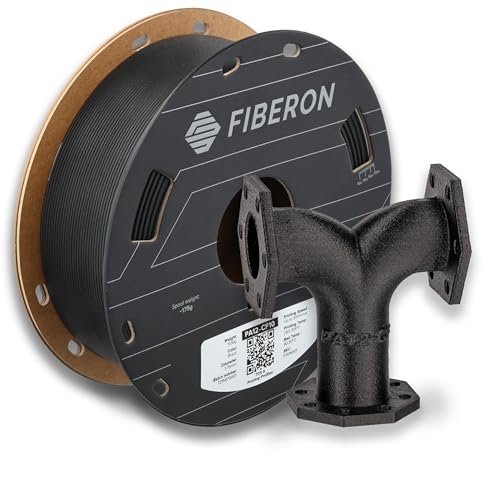
2. Polymaker Fiberon PA12-CF10 — Best Carbon Fiber Nylon for Speed Printing
The Fiberon line is Polymaker's push to bring composite-grade performance to printers that don't cost five figures, and the PA12-CF10 is the standout product in that lineup. This is a carbon fiber reinforced PA12, which means you get the low moisture sensitivity inherent to PA12 combined with the dramatic stiffness increase that carbon fiber delivers. The 131°C heat deflection temperature (ISO 75 at 0.45 MPa) is genuinely impressive for a material you can run on most mainstream FDM printers without a heated chamber. For comparison, most unfilled PA12 deflects around 50–60°C — the carbon fiber reinforcement more than doubles that figure.
PA12 has a structural advantage over PA6 in humid environments: it absorbs significantly less moisture. That means your mechanical properties are more stable over time and across print sessions. Parts you print today will perform nearly as well six months from now stored in a workshop, whereas a PA6 part in the same environment might have absorbed enough moisture to show degraded surface finish and reduced impact resistance. For anything that lives in the real world — not a climate-controlled lab — that's a meaningful difference.
The 0.5kg spool is the right format for testing or small-batch prototyping, but you'll want to move to the 1kg option if you're running this regularly. Print speeds are genuinely high — Polymaker's warp-free technology keeps dimensional accuracy tight even at aggressive feed rates, which is why this material is labeled specifically for high-speed printing. Carbon fiber composites typically need a hardened nozzle, and that applies here. Don't skip it.
Pros:
- Exceptional 131°C heat deflection temperature for desktop-printable carbon fiber
- Low moisture sensitivity keeps properties stable over time
- Optimized for high-speed printing with warp-free technology
- Compatible with most mainstream and entry-level printers
Cons:
- 0.5kg spool is small for production use
- Carbon fiber is abrasive — hardened nozzle is mandatory
3. Polymaker PolyMide CoPA — Best All-Around Nylon
Most nylon buyers don't need a reinforced composite — they need an unfilled nylon that prints reliably, holds dimensions, and doesn't require an enclosure or special hardware. The Polymaker PolyMide CoPA is the answer to that. CoPA blends Nylon 6 and Nylon 6.6 into a copolymer that captures the toughness and tensile strength of both materials while reducing the warp and shrinkage behavior that makes pure PA6.6 difficult to print. You get engineering-grade mechanical performance without the engineering-grade headaches.
The warp-free claim holds up in real-world use better than most nylon products. If you've tried standard PA6 and ended up peeling warped corners off a PEI bed, CoPA will feel like a different material entirely. Dimensional stability across the print is solid, and the layer adhesion produces parts with enough isotropy that they don't feel brittle in the Z-axis the way some filled filaments can. For gears, hinges, snap fits, and functional hardware that needs to flex rather than shatter on impact, this is the grade to reach for.
No heated chamber required, which opens this material up to Creality, Prusa, Bambu, and most other mainstream printers in their stock configuration. A heated bed at 70–80°C with a PEI or Garolite surface works well. Dry your filament before use — 80°C for 8–12 hours is standard — and keep it in a dry box during long prints. The 0.75kg spool is a slightly odd size but gives you enough material to evaluate the filament across multiple project types before committing to bulk.
Pros:
- Blends PA6 and PA6.6 for superior toughness and strength
- Excellent warp resistance — no enclosure required
- Compatible with most stock FDM printers
- Strong layer adhesion and good Z-axis integrity
Cons:
- Still hygroscopic — requires diligent drying and dry box storage
- 0.75kg spool size is nonstandard
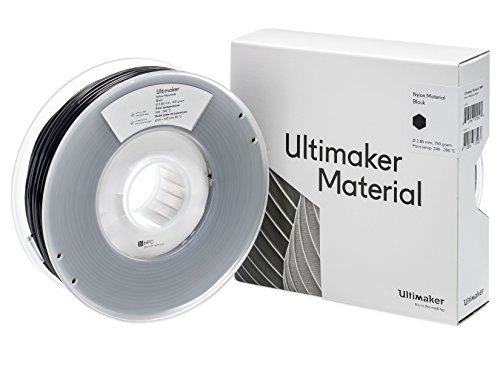
4. Ultimaker 3 NFC Nylon — Best for Ultimaker 3 Users
This pick has a narrow but important audience: if you own an Ultimaker 3 and need nylon, this is your filament. Ultimaker's NFC-tagged spools communicate material type and print parameters directly to the printer, which means you load the spool, the machine reads the tag, and it configures itself. For a professional workflow where operator error is a liability, that automatic configuration is genuinely valuable. No manual profile hunting, no failed first layers from wrong temperature settings — you just print.
The 2.85mm diameter is specific to Ultimaker's bowden-fed extruder system and is not compatible with the standard 1.75mm hotends on most other printers. That's the defining constraint here. If you're not on an Ultimaker 3, scroll past this one. But if you are, the consistent diameter tolerance Ultimaker maintains on these spools directly reduces the risk of partial clogs and underextrusion mid-print — both of which are more consequential with nylon than with PLA because nylon prints are typically functional, not decorative.
The material itself is solid unfilled nylon with Ultimaker's quality control behind it. You won't get the stiffness of a glass or carbon reinforced grade, but you'll get reliable mechanical properties, good layer adhesion, and parts that behave predictably. For prototyping functional components on an Ultimaker 3 in a professional or educational environment, this is the path of least resistance. Just factor in the premium Ultimaker charges for OEM materials versus third-party alternatives.
Pros:
- NFC auto-configuration eliminates manual profile setup on Ultimaker 3
- Consistent diameter reduces jams and underextrusion
- Professional-grade quality control from Ultimaker
Cons:
- 2.85mm diameter — only works with Ultimaker systems
- Premium price compared to third-party nylon options
- No reinforcement — lower stiffness and heat resistance than filled variants
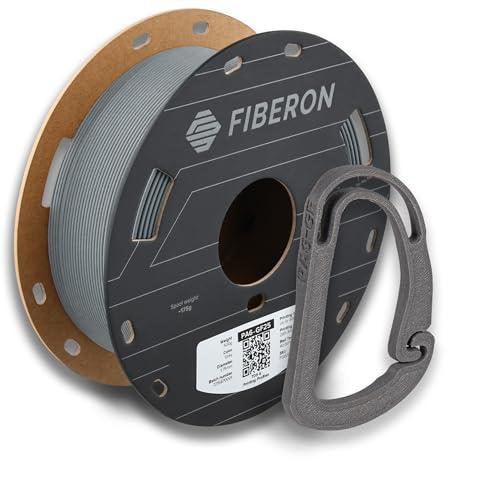
5. Polymaker Fiberon PA6-GF 0.5kg — Best Entry-Level Glass Fiber
The Fiberon PA6-GF is Polymaker's more accessible entry into glass fiber reinforced nylon — same core formulation as the PolyMide PA6-GF above, but packaged in a 0.5kg spool and positioned for printers that might not have been considered candidates for composite materials before. The Fiberon line is specifically engineered for high-speed printing on entry-level hardware, which is a meaningful distinction from the PolyMide variant. If you're running a Bambu A1, Creality K2, or similarly fast mainstream printer, Fiberon's optimized flow behavior will serve you better than a material tuned for slower, traditional print profiles.
The glass fiber reinforcement delivers the same benefits you'd expect: improved stiffness over unfilled nylon, elevated heat deflection, and better dimensional stability under load. The warp-free technology in the Fiberon line is well implemented — you'll see better first-layer adhesion and reduced corner lift compared to standard PA6 even on printers without enclosures. Applications include the same functional part categories as the 2kg PolyMide: bicycle components, drone hardware, brackets, and mechanical jigs.
The 0.5kg spool is ideal if you're evaluating glass fiber nylon for the first time or printing one-off prototypes rather than running batches. It's also a lower upfront commitment if you're upgrading to a hardened nozzle specifically for this material — which you absolutely need to do before loading it. Grey is the only color option in this size, but for functional parts that live inside assemblies or get painted, color choice rarely matters anyway. Consider this your evaluation spool before graduating to the 2kg PolyMide format.
Pros:
- Optimized for high-speed printing on mainstream and entry-level printers
- Glass fiber reinforcement with effective warp-free technology
- Good value for evaluating glass fiber nylon on a budget
- Strong thermal and mechanical properties for structural applications
Cons:
- 0.5kg spool runs out quickly in production use
- Requires a hardened nozzle — abrasive on brass
6. SUNLU PA12-CF Carbon Fiber — Best Value Carbon Fiber
SUNLU's PA12-CF delivers a compelling argument for anyone who wants carbon fiber reinforced nylon without the Polymaker price tag. The formulation is 80% PA12 and 20% carbon fiber by weight — that's a substantial fiber loading that produces genuinely stiff, low-friction parts. The surface finish on carbon fiber nylon is characteristically matte and smooth, which reduces friction in moving applications. Gears, bearings, bushings, and sliding mechanisms printed in this material outperform standard PETG or ABS in wear resistance by a significant margin.
The standout hardware feature here is the heat-resistant spool itself. You can dry the entire loaded spool at up to 110°C — no rewinding onto a separate metal or ceramic spool first. That's a practical convenience that professional users will appreciate, since drying nylon before each print session is non-negotiable for consistent results. PA12 already absorbs less moisture than PA6, so you have a bit more buffer, but pre-print drying is still the right habit with any nylon grade.
The chemical resistance profile is genuinely useful for automotive and industrial applications. PA12-CF resists grease, gasoline, and common organic solvents — the kinds of chemicals that degrade PLA and PETG rapidly. If you're printing fuel system components, workshop tool handles, or anything that contacts lubricants regularly, this is a material property you should care about. Dimensional accuracy is rated at ±0.02mm, which is competitive for a composite material at this price point. Pair it with a hardened steel nozzle and you have a high-performance setup at accessible cost.
Pros:
- Heat-resistant spool allows drying at 110°C without rewinding
- Excellent chemical resistance to oils, fuels, and solvents
- High wear resistance — ideal for gears and moving parts
- Competitive ±0.02mm dimensional accuracy
Cons:
- Carbon fiber is abrasive — requires hardened nozzle
- Matte surface finish is functional but not decorative
7. SUNLU Easy PA Nylon — Best for Beginners
If you've been curious about nylon but nervous about the warp issues and finicky drying requirements you've read about, the SUNLU Easy PA is designed to address exactly that hesitation. The Nylon 6/66 copolymer formula — similar in concept to Polymaker's CoPA, but at a lower price point — reduces the shrinkage-driven warping that makes standard PA6 frustrating on open-frame printers. The copolymer structure gives you the toughness and impact resistance of nylon without demanding the enclosure setup that pure PA6.6 often requires.
Tensile and flexural strength are notably higher than PLA or ABS, which means parts that would crack under stress in those materials will flex and recover in Easy PA. For high-stress mechanical components — gears, levers, tool handles, snap clips — that toughness is the reason you're printing nylon in the first place. The abrasion and friction resistance is similarly strong, making this a good candidate for parts that slide against other surfaces repeatedly. It's an unfilled nylon, so it prints through a standard brass nozzle without issue, which lowers the barrier to entry considerably compared to the glass or carbon fiber options above.
The PC spool is a practical choice — it's lighter and more moisture-resistant than cardboard, which matters when you're storing a hygroscopic material. Dry this filament at 80°C for 8 hours before a long print session and store it in a sealed container between uses. Those two habits will eliminate 90% of the stringing and bubbling issues that first-time nylon printers encounter. At 1kg on a printer-friendly spool for a very accessible price, this is the lowest-friction on-ramp to nylon printing in 2026. Just don't expect it to match the thermal performance of the filled grades when your parts need to survive real heat.
Pros:
- Copolymer formula minimizes warping on open-frame printers
- Works with standard brass nozzles — no hardware upgrade required
- Strong toughness and impact resistance for functional parts
- Good abrasion and friction resistance for moving components
Cons:
- Still requires diligent drying before printing
- Lower heat deflection than reinforced nylon grades
What to Look For When Buying Nylon Filament
Nylon Grade: PA6, PA12, and Copolymers
The grade of nylon matters more than the brand name printed on the spool. PA6 is the workhorse grade — high strength, good heat resistance, widely available, and relatively affordable. Its main weakness is moisture absorption; PA6 soaks up humidity aggressively, which degrades mechanical properties and print quality if you're not diligent about drying. PA12 absorbs significantly less moisture, which makes it more stable in real-world storage conditions and gives you more consistent part performance over time. It trades slightly lower heat deflection for that stability advantage. Copolymers like CoPA (PA6/6.6 blend) sit in between: they capture the toughness of both parent materials while reducing the warp behavior that makes pure PA6.6 difficult to print on open hardware. For most desktop printing applications in 2026, a CoPA or PA12-based material will serve you better than pure PA6 unless you specifically need PA6's upper thermal range.
Reinforcement: Unfilled, Glass Fiber, or Carbon Fiber
Choosing between unfilled, glass fiber, and carbon fiber reinforcement is one of the biggest performance decisions you'll make. Unfilled nylon gives you toughness and flexibility — it's great for parts that need to absorb impact and flex repeatedly without cracking. Glass fiber reinforcement adds stiffness and heat resistance at the cost of some toughness; the fibers prevent the polymer chains from moving as freely, which raises the heat deflection temperature considerably and makes the material stiffer under load. Carbon fiber reinforcement pushes stiffness further and adds a low-friction surface finish that is ideal for wear applications — gears, bearings, sliding assemblies. Both glass and carbon fiber variants require a hardened steel nozzle; they are abrasive enough to wear a brass nozzle within a single spool. Factor that hardware cost into your decision if you don't already own a hardened nozzle.
Printer Compatibility and Setup Requirements
Nylon is more demanding than PLA on your printer hardware. Most grades print at 250–280°C, which is within reach of most hotends but exceeds the PTFE-lined range where tube degradation becomes a concern. An all-metal hotend is the right long-term investment if you're printing nylon regularly. Bed temperature requirements vary by grade — unfilled CoPA and PA12 variants print on PEI or Garolite at 70–80°C without an enclosure; glass and carbon fiber filled PA6 benefits from an enclosure to reduce warp on large prints. Check the filament manufacturer's recommended settings before your first print rather than guessing. Also read our guide to the best PETG filament if you're weighing nylon against other engineering materials for your specific project — PETG handles moisture better and prints more easily, though it can't match nylon's toughness or heat resistance.
Drying and Storage: Non-Negotiable Habits
You can buy the best nylon filament on this list and ruin every print by skipping the drying step. Nylon absorbs atmospheric moisture within hours of being exposed to open air, and wet filament produces prints with bubbling, stringing, poor layer adhesion, and degraded mechanical properties. Dry every nylon spool at 80°C for 8–12 hours before your first print session, and store opened spools in a sealed container with fresh desiccant between uses. A filament dryer with temperature control is a worthwhile purchase if you print nylon regularly — the ones that let you print directly from the dryer box eliminate the moisture reabsorption problem during long prints entirely. Vacuum-sealed spools from quality manufacturers like Polymaker arrive ready to print, but once you break that seal, the drying protocol applies.
Questions Answered
Is nylon harder to print than PLA?
Yes, nylon is meaningfully more difficult than PLA. It requires higher print temperatures, is sensitive to moisture in ways PLA is not, and some grades warp during cooling if your setup lacks an enclosure or heated chamber. That said, modern copolymer formulations like CoPA and Easy PA have dramatically reduced the difficulty gap. With proper drying, a heated bed, and PEI or Garolite build surface, most mainstream printers can handle unfilled nylon without major issues. The learning curve is real but not steep.
Do I need a special nozzle for nylon filament?
For unfilled nylon, a standard brass nozzle works fine. For glass fiber or carbon fiber reinforced nylon, you need a hardened steel nozzle — these abrasive filaments will wear a brass nozzle down within one or two spools, causing underextrusion and inconsistent diameter. Hardened steel nozzles are widely available and affordable; it's a one-time upgrade that pays for itself immediately if you're printing filled materials regularly.
What's the difference between PA6 and PA12 nylon filament?
PA6 and PA12 are both polyamide nylons, but they behave differently in use. PA6 absorbs more moisture, prints at higher temperatures, and offers higher tensile strength and heat deflection in its dry state. PA12 absorbs significantly less moisture, which means its mechanical properties are more stable over time and in humid storage conditions. PA12 is the better choice for parts that will live in real-world environments where precise humidity control isn't possible. PA6 is better when maximum heat resistance is the priority and you can commit to consistent pre-print drying.
Can nylon be printed without an enclosure?
Unfilled copolymer nylons like CoPA and Easy PA print without an enclosure on most well-tuned FDM printers. Standard PA6 and especially PA6.6 benefit from an enclosure to prevent warp on larger prints. Glass fiber and carbon fiber reinforced PA6 grades are stiffer and more prone to delamination from temperature swings, so an enclosure is recommended for best results with those materials. If you're working without an enclosure, start with CoPA or a PA12-based material and work up from there.
How do I store nylon filament to prevent moisture absorption?
Store open nylon spools in an airtight container — a sealed plastic bin or vacuum bag — with fresh silica gel desiccant. Replace or recharge the desiccant when it reaches saturation (color-indicating desiccant makes this easy to track). Never leave nylon on an open spool rack overnight. Polymaker and SUNLU both ship their nylon in resealable bags with desiccant, which is the right model to maintain during storage. If you print from a filament dryer enclosure, you can keep the spool dry even during multi-hour print sessions.
Is nylon stronger than PETG?
In most mechanical performance categories, yes — nylon is stronger than PETG. Nylon has higher tensile strength, significantly better impact toughness, and better heat resistance than standard PETG. PETG does have advantages: it's much easier to print, absorbs almost no moisture, and produces parts with a smoother surface finish. For parts that need to survive drops, sustained stress, or elevated temperatures, nylon is the better choice. For parts where printability, moisture resistance, and surface quality matter more than peak mechanical performance, PETG is the practical answer. See our breakdown in the best PETG filament guide for a deeper comparison.
Buy on Walmart
- Polymaker PA6-GF Nylon Filament 1.75mm 2kg Grey Glass Fiber — Walmart Link
- Polymaker Fiberon PA12-CF10 Nylon Filament 1.75mm Black 0.5k — Walmart Link
- Polymaker Nylon Filament 1.75mm 0.75kg Black CoPA, PolyMide — Walmart Link
- Ultimaker 3 NFC Nylon Filament - Black — Walmart Link
- Polymaker Fiberon PA6-GF Glass Fiber Nylon Filament 1.75mm G — Walmart Link
- SUNLU PA12-CF Carbon Fiber Nylon Filament 1.75mm - High Prec — Walmart Link
- SUNLU Easy PA Nylon Filament 1.75mm - Warp-Free & Easy Print — Walmart Link
Buy on eBay
- Polymaker PA6-GF Nylon Filament 1.75mm 2kg Grey Glass Fiber — eBay Link
- Polymaker Fiberon PA12-CF10 Nylon Filament 1.75mm Black 0.5k — eBay Link
- Polymaker Nylon Filament 1.75mm 0.75kg Black CoPA, PolyMide — eBay Link
- Ultimaker 3 NFC Nylon Filament - Black — eBay Link
- Polymaker Fiberon PA6-GF Glass Fiber Nylon Filament 1.75mm G — eBay Link
- SUNLU PA12-CF Carbon Fiber Nylon Filament 1.75mm - High Prec — eBay Link
- SUNLU Easy PA Nylon Filament 1.75mm - Warp-Free & Easy Print — eBay Link
Buy for the grade and the reinforcement your application actually needs — the right nylon makes parts that last, and the wrong one just makes printing harder for no gain.



About Remington May
Remington May is a technology writer and digital product reviewer with a focus on consumer electronics, software, and the everyday tech that shapes how people work and live. She has spent years evaluating smartphones, laptops, smart home devices, and digital tools — approaching each product from the perspective of a practical user rather than a spec-sheet enthusiast. At Pinwords, she covers tech buying guides, product reviews, smartphone and laptop comparisons, and practical how-to guides for getting more out of your devices.
Check for FREE Gifts. Or latest free books from our best messages.
Remove Ad block to reveal all the secrets. Once done, hit a button below