Best Chairs For Video Editing 2026
by Remington May
Studies show that video editors spend an average of 6 to 10 hours per day seated at their workstations — and poor seating is one of the leading causes of chronic back pain among creative professionals. That number should give you pause before you settle for whatever chair happens to be available. Your chair is not a passive piece of furniture. It is active equipment, and in 2026, the market has more purpose-built options for long-session creatives than ever before.
Whether you are cutting feature films in DaVinci Resolve, assembling YouTube content in Premiere Pro, or color grading short-form clips for client delivery, the chair beneath you determines how long you can work comfortably and how sharp your focus stays in hour seven. The right ergonomic chair supports your lumbar curve, keeps your hips neutral, and lets you shift position without breaking your concentration. The wrong one costs you in chiropractor bills and missed deadlines.
This guide covers seven of the best chairs for video editing in 2026, from premium investment picks to budget-conscious options that still deliver real ergonomic value. If you are also building out your editing station, check out our guide to the best desk for video editing 2026 — the right desk and chair combination makes a measurable difference. For additional context on what makes a chair perform across long creative sessions, Wikipedia's overview of ergonomics is a solid starting point. Browse our full buying guide for deeper breakdowns across every category.
Contents
Standout Models in 2026
- #PreviewProductRating
- Bestseller No. 1
 Rating:

- Bestseller No. 2
 Rating:
 - Bestseller No. 3
 Rating:
 - Bestseller No. 4
 Rating:
 - Bestseller No. 5
 Rating:
 - Bestseller No. 6
 Rating:
 - Bestseller No. 7
 Rating:
Full Product Breakdowns
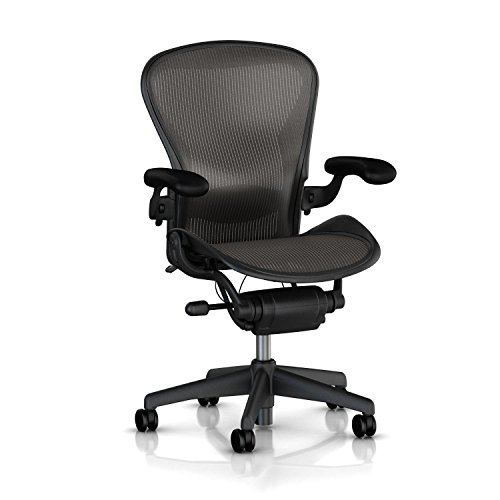
1. Herman Miller Aeron Executive Office Chair — Best Overall for Video Editing
The Herman Miller Aeron is the gold standard for a reason. It has been refined over decades, and the Size B configuration hits the sweet spot for most editors — enough seat depth without cutting off circulation at the knees during those marathon grading sessions. The PostureFit SL lumbar system supports both the sacrum and lumbar spine simultaneously, which is something you will feel the difference of within the first hour.
The 8Z Pellicle mesh distributes weight evenly across the seat and back, eliminating the pressure points that build up on foam chairs over time. The tilt limiter and tension control let you lock into your ideal recline angle, which matters when you are leaning back to review playback versus leaning forward to scrub a timeline. Fully adjustable arms mean you can dial in your forearm height relative to your desk surface exactly.
This is an open-box unit, which brings the price down significantly from new. Herman Miller's 12-year warranty transfers with the chair regardless of original purchase date, and the 30-day money-back guarantee gives you a real trial window. If you spend more than six hours a day editing, this chair pays for itself in avoided physical therapy.
Pros:
- PostureFit SL supports sacrum and lumbar simultaneously
- 8Z Pellicle mesh eliminates pressure points over long sessions
- Fully adjustable arms, tilt tension, and forward tilt
- 12-year warranty even on open-box units
- 30-day money-back guarantee for risk-free trial
Cons:
- Premium price point, even open-box
- Size B may not fit taller or larger editors — measure before buying
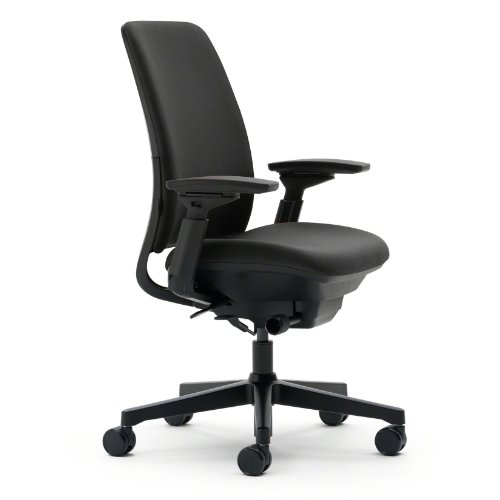
2. Steelcase Amia Office Chair — Best for All-Day Comfort
The Steelcase Amia is built for the editor who stays seated. Its hidden LiveLumbar system does not require you to remember to adjust anything — it responds dynamically to how you move throughout the day, keeping your lower back supported whether you are sitting straight during a client call or leaning forward to review color grades on a tight timeline. That reactive quality is rare at this price tier.
The seat edge is flexible, which sounds like a minor detail until you have spent three hours with a rigid edge cutting into the backs of your thighs. The flexible seat edge combined with extra cushioning makes a genuine difference during 8-to-10-hour sessions. The 4D arm support adjusts in height, width, pivot, and depth — so you are not just raising and lowering, you are dialing in exact positioning for your keyboard and mouse hand.
Full recline range with a lockable upright position gives you the flexibility to shift posture intentionally throughout the day. If you are comparing editing workstation setups and looking at desk options alongside this chair, our best desk for video editing guide pairs well with this purchase decision. The Amia is a serious ergonomic chair from a company that builds for demanding professional environments.
Pros:
- LiveLumbar system adapts to movement automatically
- Flexible seat edge reduces thigh pressure during extended sessions
- 4D arm adjustability covers height, width, pivot, and depth
- Full recline with lockable upright position
- Proven Steelcase build quality and durability
Cons:
- Buzz2 fabric runs warmer than mesh — ventilation is limited
- Adjustment learning curve takes a day or two to master
3. FLEXISPOT OC3 Ergonomic Chair — Best High-Back Mesh for Ventilation
If your editing setup runs hot — multiple monitors, a powerful workstation, maybe a GPU tower nearby — ventilation matters more than most people admit. The FLEXISPOT OC3 uses a high-density mesh across both the seat and back, which keeps air moving throughout the day. You will not notice it on a cool morning, but you will absolutely notice its absence on a long afternoon session in a warm room.
The adjustable lumbar support and 2D headrest let you customize the fit for your spine length and neck position. The lockable backrest is a practical feature for video editors who switch between active scrubbing posture and relaxed review posture multiple times per hour. The high back design supports your upper back and shoulders, which matters if you spend time monitoring audio levels with headphones that add fatigue to your neck and traps.
This chair adapts across work environments — home office, studio, or a shared creative space. It is priced accessibly, which makes it a strong consideration if you need to outfit multiple editing stations without spending premium chair money on every seat. The build quality exceeds what you would expect at this price point.
Pros:
- Dual mesh seat and back for all-day ventilation
- Adjustable lumbar and 2D headrest for spine and neck support
- Lockable backrest locks in your preferred angle
- High back covers upper back and shoulders
- Competitively priced for multi-seat studio setups
Cons:
- Armrests have limited adjustability compared to 4D options
- Seat cushion firmness may feel stiff initially
4. Branch Ergonomic Chair — Best Mid-Range Pick for Versatility
Branch has carved out a strong reputation in the mid-range ergonomic space, and the Branch Ergonomic Chair justifies that reputation. Eight adjustment points is a serious number — most chairs in this price range offer four or five. You get recline tension, tilt lock, lumbar height and depth, armrest height, armrest angle, seat height, and seat depth. That level of configurability means the chair fits you rather than you adapting to the chair.
The breathable mesh backrest handles ventilation well, and the smooth-rolling casters work reliably on hard floors and low-pile carpet. The adjustable lumbar support is firm enough to actually hold position, which is not always the case on chairs at this price point where lumbar pads tend to drift. Branch includes clear assembly instructions and the build process is straightforward.
For video editors who are also setting up a full creative workstation, the Branch chair pairs well with a monitor arm setup and a purpose-built desk. If you are building out from scratch, the same principles that apply to the best chairs for programmers apply here — lumbar support, adjustable arms, and breathability are the non-negotiables for screen-intensive work. The Branch delivers on all three at a price that does not require a second thought.
Pros:
- 8 adjustment points for full-body fit customization
- Breathable mesh back handles warm studio environments
- Lumbar support holds position reliably throughout the day
- Smooth casters work on hard floors and carpet
- Strong value in the mid-range tier
Cons:
- Armrests stop short of full 4D adjustability
- Seat cushion may feel firm to users accustomed to foam chairs
5. Humanscale Freedom Office Chair with Headrest — Best for Neck and Head Support
The Humanscale Freedom takes a different design philosophy than most ergonomic chairs. Instead of giving you dozens of manual adjustments, it uses weight-sensitive recline mechanics that automatically calibrate resistance based on your body weight. You recline naturally, and the chair responds proportionally. The pivoting backrest adapts to your spine's changing angle through recline without you touching a single lever.
The integrated headrest is the standout feature for video editors specifically. When you lean back to review a longer playback sequence or just decompress between cuts, the headrest provides genuine neck support rather than pushing your head forward, which is the failure mode of most add-on headrests. The Graphite frame with Black Fourtis fabric has a clean, professional look that works in studio and home office environments alike.
Hard casters are included for carpet — if you are on a hard floor, swap to soft casters. The Duron arms are height-adjustable and positioned well for typing and mouse work. This chair is a strong recommendation for editors who experience neck and upper back fatigue specifically, particularly those who monitor on large displays that require looking slightly up or across a wide horizontal field.
Pros:
- Weight-sensitive recline calibrates automatically to your body
- Pivoting backrest adapts continuously to spine angle during recline
- Integrated headrest provides real neck support — not just a prop
- Minimal adjustment interface reduces setup complexity
- Premium build quality and professional aesthetic
Cons:
- Height-adjustable Duron arms are less configurable than 4D options
- Auto-recline may feel unusual if you prefer locked recline positions
- Higher price tier requires budget commitment
6. SIHOO Doro C300 Ergonomic Chair — Best Auto-Adaptive for Intuitive Support
SIHOO built the Doro C300 around the concept of a chair that adjusts to you rather than requiring you to adjust it. The 3D headrest, lumbar support, and armrests all feature automatic macro-adjustment — they respond to your posture as you shift rather than requiring you to pause your work to dial in a setting. For video editors who are deep in a creative flow state, that hands-free adaptability is genuinely useful.
The domino auto-adaptive lumbar system tracks your lower back position and adjusts support accordingly. The 3D linkage armrests move with your arms rather than staying fixed as you shift posture. The triangular soft elastic frame across the back provides structured support from shoulders to lumbar simultaneously, which distinguishes this chair from standard mesh backs that support only the mid-lumbar zone. The breathable mesh seat keeps air circulating during long sessions.
The 4-position backrest height adjustment accommodates a wide range of torso lengths, and the auto-revert to level 1 when adjusted to maximum is a thoughtful mechanical detail. If you are building out a workstation for creative work and want a chair that stays out of your way ergonomically, the SIHOO Doro C300 delivers that in 2026 at a price point below the Herman Miller and Humanscale tier.
Pros:
- Auto-adaptive lumbar, headrest, and armrests reduce manual adjustment
- Triangular support frame covers full back from shoulders to lumbar
- 3D linkage arms move with posture changes dynamically
- Breathable mesh seat for ventilation in warm environments
- 4-position backrest height handles varying torso lengths
Cons:
- Auto-adjustment systems may feel unfamiliar during initial break-in period
- Feature set adds mechanical complexity compared to manual chairs
7. BestOffice Ergonomic Mesh Chair — Best Budget Option for New Editors
Not every editor is ready to drop several hundred dollars on a chair, especially when you are still building out your first editing rig. The BestOffice Ergonomic Mesh Chair is the honest answer to the question of what to sit in when your budget is tight but you still need to put in serious hours. It is BIFMA-certified, which means it has been independently tested for structural integrity and load capacity — not just manufacturer claims.
The mesh back provides basic ventilation, and the height-adjustable seat with locking backrest covers the fundamentals. The ergonomic mesh design relieves the stress and back pain that come from sitting in a standard flat chair for extended periods. Weight capacity tops out at 250 pounds. Assembly is quick, and the rolling swivel base handles daily movement across a workspace without issues.
You are not getting 4D arms or auto-adaptive lumbar at this price point. You are getting a seat that works better than a dining chair, keeps you cooler than foam, and lets you focus on learning your craft and building your editing workflow. As your income from editing grows, you upgrade. For creators who are also interested in how ergonomics applies to writing-heavy creative work, the best chair for writers guide covers similar sitting-endurance considerations.
Pros:
- BIFMA-certified for structural reliability up to 250 lbs
- Mesh back provides ventilation over foam alternatives
- Adjustable height and locking backrest cover core ergonomic needs
- Budget price makes it accessible for editors just starting out
- Quick assembly and straightforward setup
Cons:
- Minimal arm adjustability — not suitable for precision arm positioning
- Lumbar support is basic compared to mid-range options
- Not built for editors regularly doing 8-plus-hour sessions
What to Look For When Buying a Chair for Video Editing
Lumbar Support Quality
This is the single most important feature for editors. You need genuine lumbar support, not a cosmetic bump in the backrest. Look for:
- Adjustable lumbar position — height and depth should move independently
- Dynamic lumbar that responds to posture shifts, not static foam
- Support that reaches both the sacrum and lumbar curve, not just the mid-back
- Firm enough to hold position through a full day without compressing flat
Fixed lumbar pads that cannot be repositioned are a dealbreaker for sessions longer than four hours. The Herman Miller PostureFit SL and Steelcase LiveLumbar system represent the current best-in-class approaches.
Armrest Adjustability
Video editing involves constant mouse and keyboard work. Your armrests directly determine whether your shoulders, elbows, and wrists are neutral or stressed. Here is what matters:
- Height adjustment — forearms should rest parallel to the desk surface
- Width adjustment — arms should align under your shoulders, not flared out
- Pivot adjustment — useful if you use a large mousepad or frequently switch between keyboard and external hardware
- Depth adjustment — forward arm rest placement reduces reach on full-size keyboards
4D armrests cover all four dimensions. If you are controlling a control surface, jog wheel, or audio mixer alongside your keyboard, get 4D arms.
Seat Depth and Cushion Material
Seat depth determines whether the chair fits your leg length correctly. The gap between the front edge of the seat and the back of your knees should be two to four finger-widths. Too deep and the edge cuts into your legs. Too shallow and your thighs lack support. Check for:
- Adjustable seat depth on premium models
- Flexible or waterfall seat edge to reduce thigh pressure
- Mesh seat vs. foam seat — mesh breathes better, foam may feel more initially cushioned but compresses over time
- Seat pan width appropriate for your body — most standard seats fit up to 19-20 inches hip width
Recline Range and Tilt Control
You change posture constantly during an edit session. You lean forward during precision timeline work and lean back during playback review. Your chair needs to support both modes. Look for:
- Multi-position recline lock — at least three lockable positions
- Tilt tension control so recline resistance matches your body weight
- Synchronized tilt that reclines seat and back together rather than just the backrest
- Forward tilt option for editors who prefer a slight forward pitch at the keyboard
Fixed-recline chairs are unsuitable for professional editing work. You need to move, and the chair needs to support that movement intelligently.
FAQs
What makes a chair specifically good for video editing versus regular office work?
Video editing involves longer seated sessions, more frequent posture shifts between active scrubbing and passive review, and often wider monitor setups that require more lateral neck movement. The best chairs for video editing in 2026 prioritize dynamic lumbar support, 4D arm adjustability, and breathable mesh construction over foam. Standard office chairs are built for intermittent sitting; editing chairs need to perform across 6 to 10 continuous hours.
Is it worth spending over $500 on a chair for video editing?
Yes, if you edit professionally or semi-professionally. A chair like the Herman Miller Aeron or Humanscale Freedom delivers measurably better ergonomic support that reduces fatigue and prevents the chronic back issues that plague editors who sit in inadequate chairs for years. The long-term cost of back pain — in medical expenses and lost productivity — exceeds the price difference between a mid-range and premium chair within one to two years of regular use.
Should I prioritize mesh or foam for a video editing chair?
Mesh is generally the better choice for video editing environments. Editing setups run warm — multiple monitors, a powerful workstation, and hours of continuous operation generate significant ambient heat. Mesh allows continuous airflow across your back and seat, which reduces fatigue and discomfort over long sessions. High-quality foam chairs can work if ventilation is adequate, but mesh is the practical default recommendation for professional editing seats in 2026.
How important is headrest support for video editors?
Very important, particularly if you monitor on large displays or use headphones for extended periods. Headphone weight and the subtle upward gaze angle toward a mounted monitor both add load to your cervical spine. A well-positioned headrest lets you decompress your neck during playback review and prevents the forward-head posture that develops over time. The Humanscale Freedom's integrated headrest is the strongest example in this roundup.
Can I use a gaming chair for video editing?
Gaming chairs are not recommended for professional video editing sessions. Most gaming chairs are built around aesthetics rather than clinical ergonomics — the aggressive bucket seat shapes and fixed lumbar pillows actively promote poor posture during the sustained, low-intensity sitting that editing requires. The chairs reviewed in this guide are designed specifically for all-day seated work and provide measurably better support for the positions editors actually use.
How long does it take to properly adjust an ergonomic chair for video editing?
Plan on 15 to 30 minutes for initial setup, and two to three days of use before you have optimized every adjustment. Start with seat height — feet flat on the floor, knees at 90 degrees. Then dial in lumbar position, arm height, and tilt tension. After your first full editing session, you will identify which adjustments need refinement. A properly adjusted chair should feel neutral and supportive without requiring conscious effort to maintain good posture.
Buy on Walmart
- Herman Miller Aeron Executive Office Chair-Stainless Steel, — Walmart Link
- Steelcase Amia Office Chair - Most Comfortable Sit - 4 Point — Walmart Link
- FLEXISPOT Ergonomic Office Chair, High Back Mesh Swivel Comp — Walmart Link
- Branch Ergonomic Chair - A Versatile Desk Chair with Adjusta — Walmart Link
- Humanscale Freedom Office Chair with Headrest - Ergonomic Wo — Walmart Link
- SIHOO Doro C300 Ergonomic Office Chair with Ultra Soft 3D Ar — Walmart Link
- BestOffice Office Chair Ergonomic Cheap Desk Chair Mesh Comp — Walmart Link
Buy on eBay
- Herman Miller Aeron Executive Office Chair-Stainless Steel, — eBay Link
- Steelcase Amia Office Chair - Most Comfortable Sit - 4 Point — eBay Link
- FLEXISPOT Ergonomic Office Chair, High Back Mesh Swivel Comp — eBay Link
- Branch Ergonomic Chair - A Versatile Desk Chair with Adjusta — eBay Link
- Humanscale Freedom Office Chair with Headrest - Ergonomic Wo — eBay Link
- SIHOO Doro C300 Ergonomic Office Chair with Ultra Soft 3D Ar — eBay Link
- BestOffice Office Chair Ergonomic Cheap Desk Chair Mesh Comp — eBay Link
Next Steps
- Check the current price on your top two or three picks — ergonomic chair prices fluctuate frequently on Amazon, and open-box deals like the Herman Miller Aeron can change availability quickly.
- Measure your body dimensions before ordering — note your seat-to-floor height, torso length, and hip width to confirm the chair's size range fits you before it ships.
- Order from a seller with a return window and actually sit in the chair through at least one full editing session before the return window closes — no spec sheet tells you how a chair feels at hour eight.
- Pair your new chair with a proper desk setup — review our best desk for video editing guide to ensure your desk height and monitor placement work with your new ergonomic position.
- Set a 30-day posture check-in reminder — after a month of use, reassess lumbar position, arm height, and tilt tension with fresh eyes. Most editors discover one or two adjustments they missed during initial setup.



About Remington May
Remington May is a technology writer and digital product reviewer with a focus on consumer electronics, software, and the everyday tech that shapes how people work and live. She has spent years evaluating smartphones, laptops, smart home devices, and digital tools — approaching each product from the perspective of a practical user rather than a spec-sheet enthusiast. At Pinwords, she covers tech buying guides, product reviews, smartphone and laptop comparisons, and practical how-to guides for getting more out of your devices.
Check for FREE Gifts. Or latest free books from our best messages.
Remove Ad block to reveal all the secrets. Once done, hit a button below